Building the Calibration and Validation Roadmap for CRISTAL’s Hydro-Cryo Products
In the frame of the ESA CRISTAL IN-PROVA project, NOVELTIS leads an 8-partner consortium establishing the calibration and validation roadmap for CRISTAL’s Level-2 Hydro-Cryo data products, combining direct comparison with reference measurements and cross-validation against other altimetry missions.
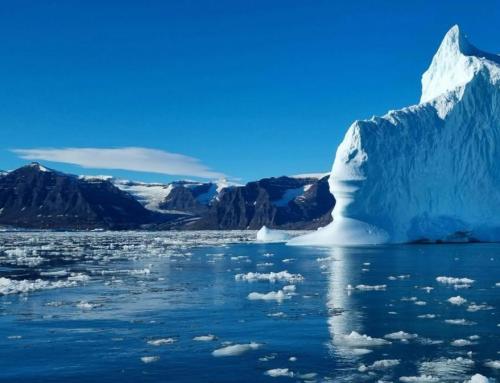
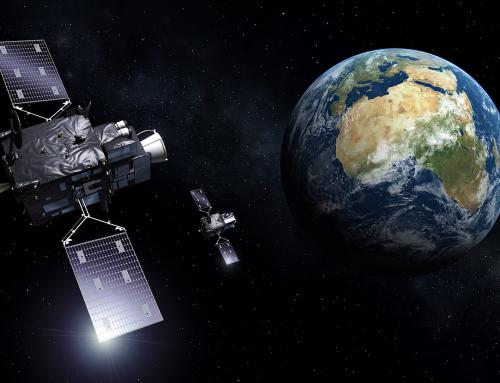
The CRISTAL mission, run by ESA within the European Union’s Copernicus programme, represents a major step forward in cryosphere observation. As the first high-resolution, dual-band, interferometric, operational radar altimeter mission, CRISTAL will deliver invaluable data on sea ice, icebergs and land ice, as well as on oceans and inland waters.
CRISTAL IN-PROVA contributes to the mission’s success by establishing a calibration and validation roadmap for CRISTAL’s Level-2 Hydro-Cryo products, covering the cryosphere (sea ice, icebergs and land ice) and inland waters (rivers, lakes). The project combines two complementary approaches: direct comparison with Fiducial Reference Measurements (FRM) – independent, tailored and fully characterised reference data with traceable uncertainty – and cross-validation against other satellite missions such as Copernicus Expansion Missions, including Sentinel-6, CryoSat-2, ICESat-2, SWOT, Sentinel-3 NG Topography, CIMR and ROSE-L.
To strengthen this validation framework, the project includes the development of two dedicated tools: a Validation Performance Simulator, which assesses calibration and validation methods through simulated and co-located datasets aligned with the CRISTAL Mission Requirements Document, and a Match-Up System, which co-locates CRISTAL data with external measurements to enable precise accuracy comparisons.
The project has also grown to include INSIGHT, a platform under development by NOVELTIS. INSIGHT is a European initiative aimed at providing open access to in-situ measurements through a centralized and standardized data hub. The platform’s primary objective is to support calibration and validation (Cal/Val) activities for satellite altimetry, while also serving a broad range of end-users involved in environmental services and studies, as well as hydrological and polar monitoring at both European and international levels.
Project details
Categories:
Tags:
Share this project:
Building the Calibration and Validation Roadmap for CRISTAL’s Hydro-Cryo Products
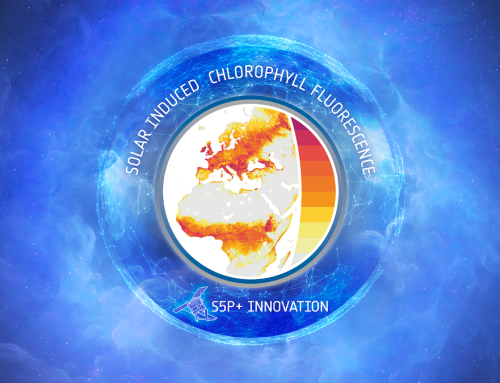
In the frame of the ESA-TROPOSIF project, NOVELTIS is in charge of elaborating and validating a new SIF product from Sentinel-5p data and of its exploitation to improve global scale simulations of carbon and water cycles with a terrestrial biosphere model (data assimilation).
Project details
Categories:
Tags:
.
Despite the great success of these satellites, the exploitation of SIF measurements for most applications is however limited by their coarse spatial resolution and low number of observations.
These limitations could be largely alleviated by the data provided by the TROPOMI instrument on-board Sentinel-5p: this instrument combines a high spatial resolution (3.5 km x 7 km at nadir), a large swath, and a daily revisit frequency, which enables a quasi-continuous sampling of the spatial and temporal variations of SIF at the global scale. The measurements also have a high signal-to-noise ratio and cover a large spectral range. These characteristics constitute a significant improvement in terms of accuracy and number of data available daily compared to those provided by previous missions.
Results
Client / Partner(s)